Crystalline Technology

How Crystalline Waterproofing Works

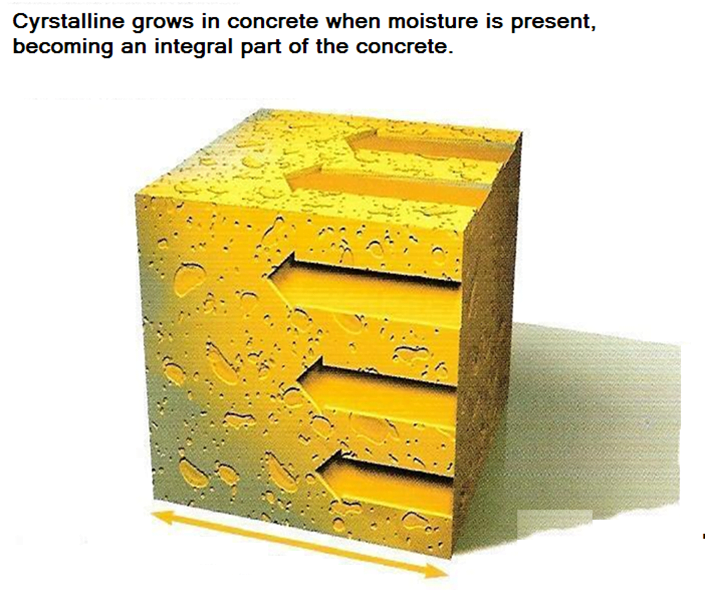
In the presence of water, the components which make up the concrete trigger a chemical reaction under the catalyst of active substances and reproduce crystalline along the cracks, which blocks the passages of water, inhibiting water leakage and achieving waterproofing/anti-corrosion properties.

Application is applied by trained technical personnel. The curing time is 24 hours.

Concrete block after crystallization

The Crystallization Process

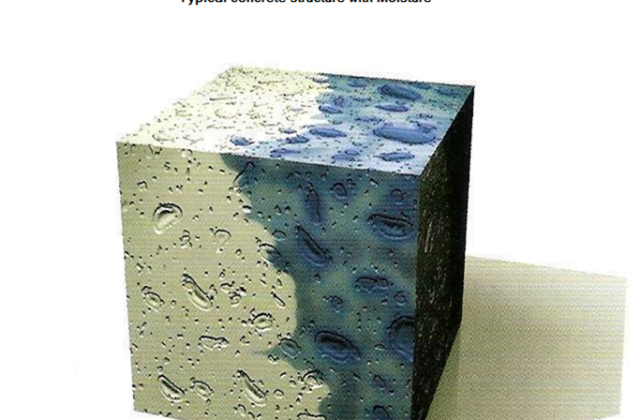
Concrete block with moisture in its pores

1. Penetration

The active substance contained in the crystalline permeates into the cracks and pores of the concrete, penetrating its capillary tracts.
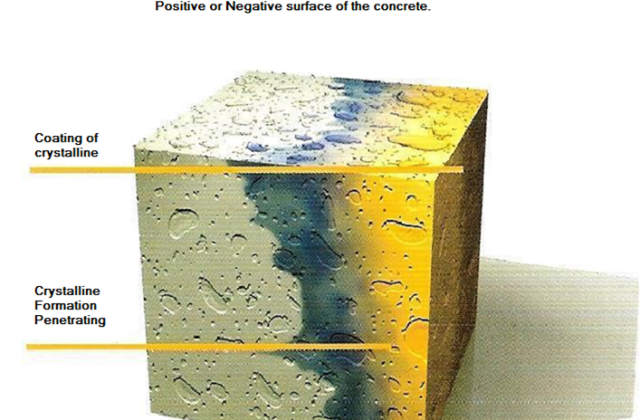
Crystalline added to a concrete block

2. Crystal Formation

The active ingredients react with various concrete materials, forming insoluble crystals which fill out cracks and pores.
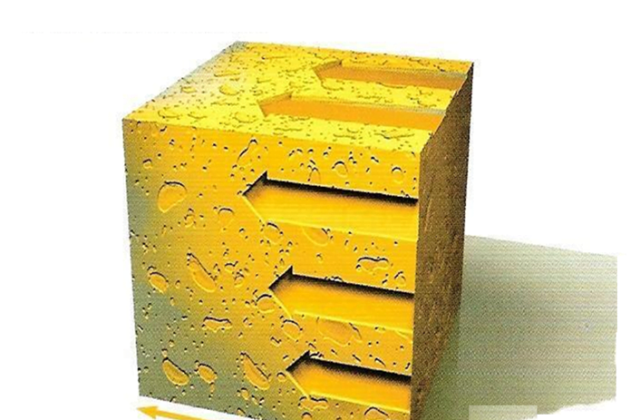
Concrete block after crystallization

3. Sealed & Breathing

Water and other chemicals can no longer pass through the concrete, but air still can – allowing the concrete to breathe and avoiding vapour pressure build-up.

Self-Sealing When Moisture Returns

In the absence of further moisture, the product’s components lie dormant. Should moisture recur at any time, the sealing process resumes automatically and advances deeper into the concrete, continuously sealing itself.

Crystalline Waterproofing

Crystalline waterproofing crystals forming in concrete

Why Crystalline?

Environmental commitment, durability and cost-effective application.

Concrete block after crystallization

How Does It Work?

How crystals form in the pores and cracks of concrete to block water.
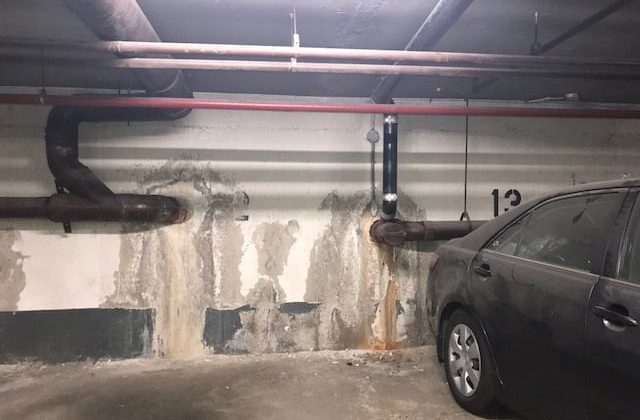
Crystalline waterproofing applied to a concrete structure

Where Is It Used?

Tunnels, foundations, parking garages, reservoirs, elevator shafts and more.

Crystalline waterproofing products

Advantages

The benefits of our crystalline waterproofing system.

Contact Waterproof Masters to learn more about crystalline waterproofing.

Scroll to Top